
Ever found yourself longing for a dish that brings vibrant color and comforting flavors to your table? Japchae, the exquisite Korean Glass Noodle Stir Fry, is that culinary gem you didn’t know you needed! Made with chewy sweet potato noodles and a medley of fresh vegetables, this recipe is incredibly versatile, allowing you to swap in your favorites or explore a vegan twist using tofu. Not only is Japchae a delightful way to impress your friends and family, but it also promotes healthy eating as a customizable, gluten-free option. Plus, it comes together in a flash—perfect for those weeknights when you crave something homemade yet quick. Curious about how to create this mouthwatering dish that shines in both casual meals and festive gatherings? Let’s dive in!
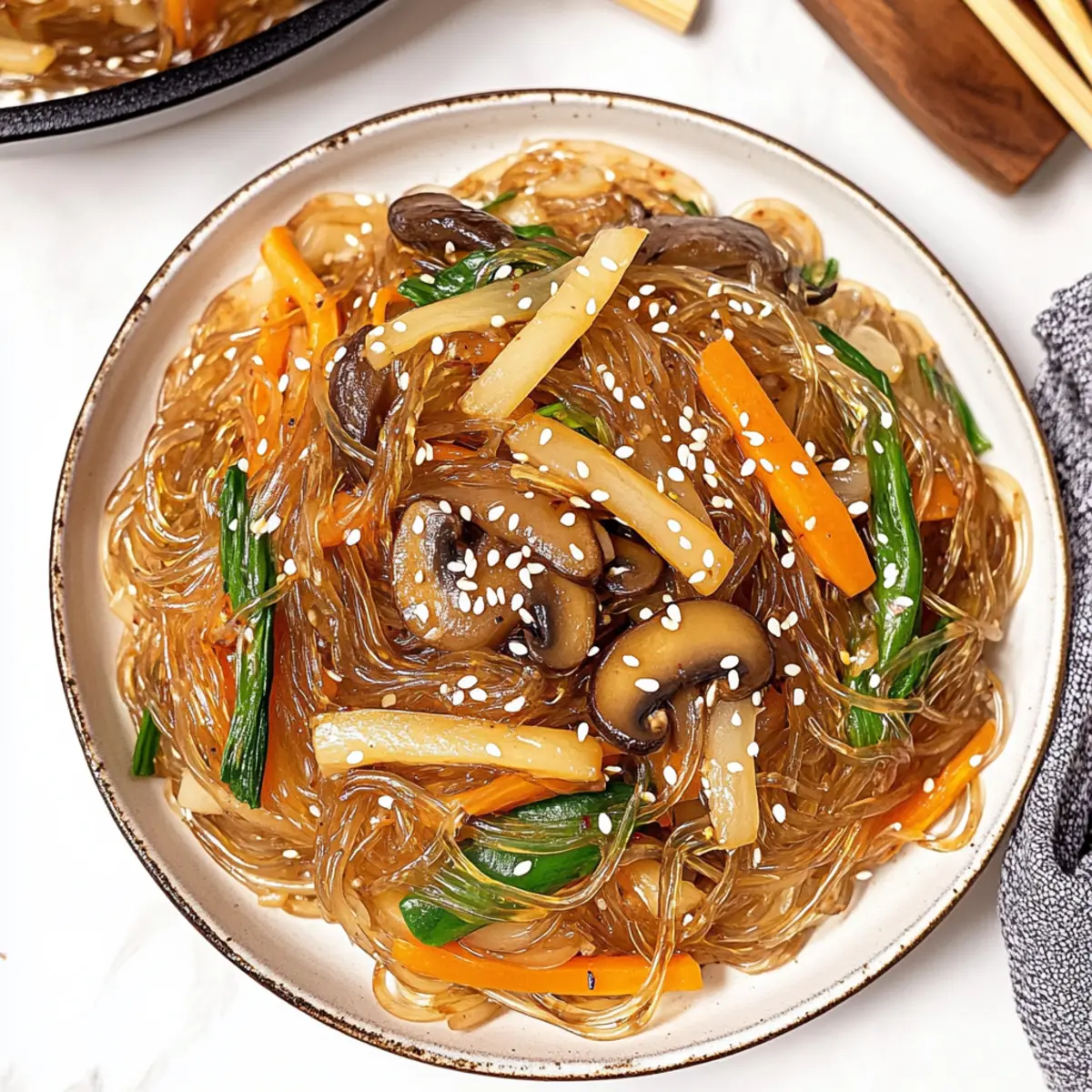
Why is Japchae a Must-Try Dish?
Vibrant Visual Appeal: The colorful medley of vegetables paired with glossy noodles creates a stunning dish that is as pleasing to the eye as it is to the palate.
Customizable for Any Diet: Whether you’re a meat lover or prefer plant-based meals, Japchae accommodates all by allowing easy substitutions, like using tofu for a delicious vegan option.
Wholesome Ingredients: Made with sweet potato glass noodles and fresh vegetables, each bite offers a satisfying balance of flavors and textures while still being gluten-free when using the right noodles.
Quick and Simple: This dish can be prepared in about 30 minutes, making it a fantastic choice for busy weeknights, especially when paired with sides like kimchi or steamed rice.
Crowd-Pleasing Flavor: With its perfect blend of sweet and savory notes, Japchae is sure to impress family and friends during any gathering or celebration! Dive into experience and get inspired with your customization.
Japchae Ingredients
• For the Noodles
- Sweet Potato Glass Noodles – These provide a chewy texture and are the base of your Japchae dish.
• For the Protein
- Beef or Pork (optional) – Adds richness; substitute with tofu for a vegetarian or vegan version.
- Egg – Enhances flavor and texture; omit for a vegan dish, and use silken tofu as an alternative.
• For the Vegetables
- Carrot – Offers crunch and a hint of sweetness; you can also use bell peppers.
- Yellow Onion – Brings depth of flavor; shallots can serve as a substitute.
- Mushrooms – Provides umami; choose varieties like shiitake or button for added chewiness.
- Baby Spinach – Offers freshness and light bitterness; kale can also work in this dish.
- Green Onion – Adds sharpness; feel free to substitute with chives.
• For Cooking
- Oil (for cooking) – Essential to prevent sticking; use sesame oil for an extra flavor boost.
- Soy Sauce (light sodium) – The main seasoning for umami flavor; opt for tamari for gluten-free.
- Honey (or brown sugar) – Sweetens the dish; an optional ingredient if you prefer sugar alternatives.
- Toasted Sesame Oil – Enhances aroma and flavor; can be omitted if unavailable or replaced with more regular oil.
Dive into the delightful flavors of Japchae, and enjoy making this customized stir fry a family favorite!
Step‑by‑Step Instructions for Japchae (Korean Glass Noodle Stir Fry)
Step 1: Make the Sauce
In a mixing bowl, whisk together ¼ cup of soy sauce, 1 tablespoon of honey (or brown sugar), and 1 tablespoon of toasted sesame oil until fully combined. This sweet-savory sauce will enhance the flavor of the Japchae and should have a smooth consistency. Set it aside to let the flavors meld while you prepare the rest of the ingredients.
Step 2: Cook the Noodles
Bring a pot of water to a rolling boil, then add 8 ounces of sweet potato glass noodles. Boil for 10–15 minutes, or until the noodles are soft and slightly chewy. Once cooked, drain the noodles and rinse them under cold water to stop the cooking process and prevent stickiness. Set the noodles aside in a large bowl.
Step 3: Prepare the Egg
Heat a nonstick skillet over medium heat and add a small amount of oil. Beat 2 eggs in a bowl and pour them into the skillet, swirling to create a thin omelet. Cook for about 2-3 minutes, or until set, then carefully slide it onto a cutting board. Once cooled, julienne the omelet into thin strips and set them aside for later.
Step 4: Sear the Meat
In the same skillet, add a bit more oil and increase the heat to medium-high. Add 4 ounces of thinly sliced beef or pork, cooking for about 5-7 minutes, stirring frequently, until browned and cooked through. Check for doneness by ensuring there’s no pink remaining. Remove the meat from the pan and set it aside in a bowl.
Step 5: Cook the Vegetables
Using the same skillet, add 1 diced onion, 1 sliced carrot, and 4 ounces of mushrooms (shiitake or button works well). Sauté each vegetable for 2-3 minutes, until they soften but still retain some crunch. Season lightly with salt and pepper, then add 2 cups of baby spinach, cooking just until wilted. Once the vegetables are done, transfer them to a plate and keep warm.
Step 6: Combine Everything
Return the pan to medium heat and pour the prepared sauce into it, allowing it to heat for about 1 minute. Add the cooked noodles, tossing them in the sauce until they are evenly coated and glossy. Incorporate the sautéed vegetables, seared meat, and strips of omelet, gently mixing everything together for about 2-3 minutes, allowing the flavors to meld beautifully.
Step 7: Serve
Transfer the Japchae to a serving dish, garnishing with sesame seeds and sliced green onions if desired. Serve this vibrant Korean glass noodle stir fry hot or warm, perfect as a main dish or alongside your favorite sides. Enjoy the delightful flavors and beautiful presentation of your homemade Japchae!
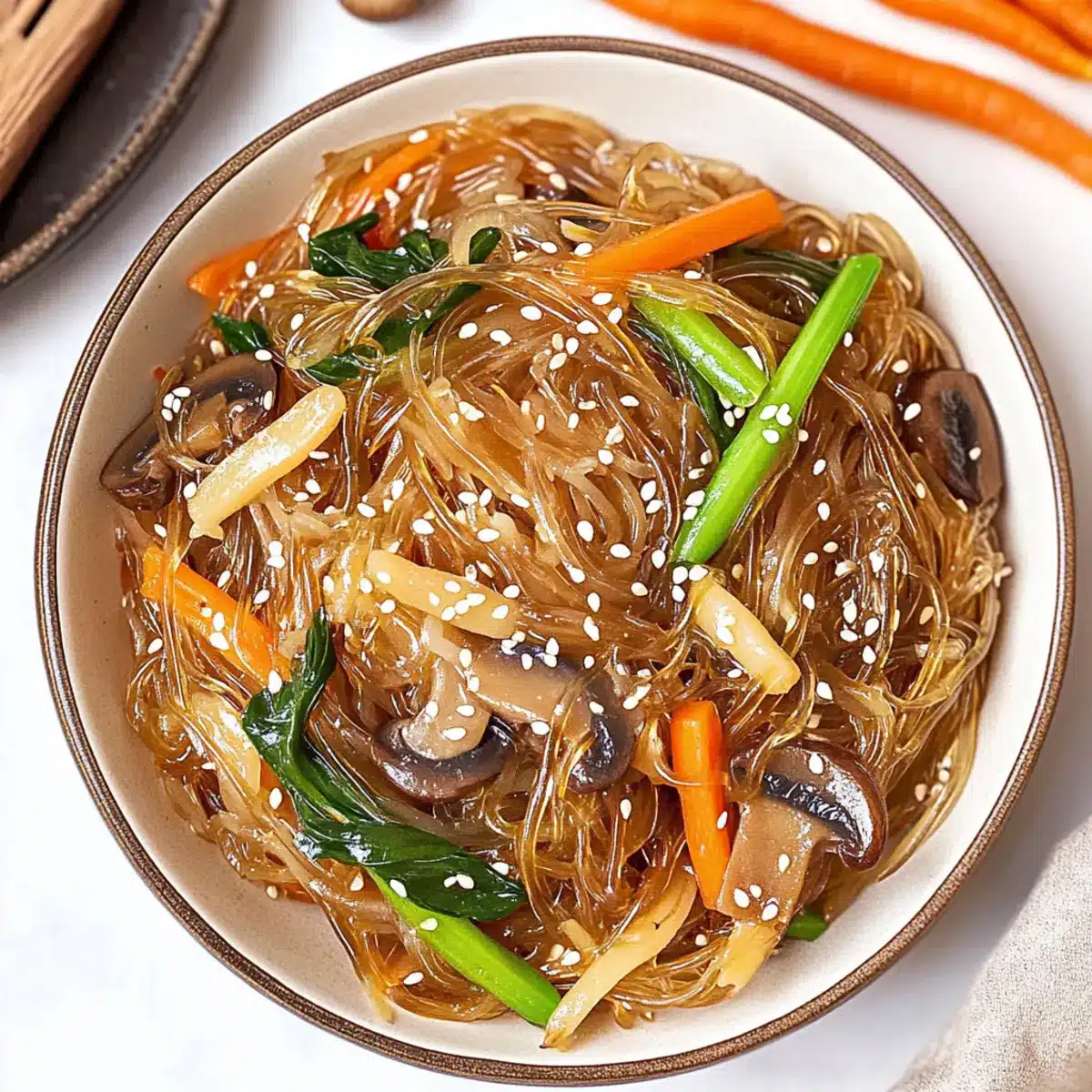
How to Store and Freeze Japchae
Fridge: Keep your leftover Japchae in an airtight container for up to 3 days. Store it in the fridge to maintain freshness and flavor.
Freezer: If you want to make a batch ahead of time, freeze portioned Japchae in airtight containers or freezer bags for up to 2 months. Thaw overnight in the fridge before reheating.
Reheating: To reheat, warm in a skillet over medium heat, adding a splash of water or broth to maintain moisture. Stir gently until heated through, ensuring the noodles remain tender.
Note: When frozen, the texture may change slightly; however, the delicious flavors of the Japchae will still be there to enjoy!
Japchae Variations & Substitutions
Feel free to get creative and tailor this Japchae dish to your liking, making it even more delicious!
- Vegetarian: Substitute beef or pork with tofu for a protein-packed vegetarian option. Just sauté the tofu until golden.
- Vegan: Omit the egg and replace it with silken tofu for a creamy texture that complements the dish beautifully.
- Gluten-Free: Use tamari instead of regular soy sauce to maintain that rich umami flavor without the gluten.
- Spicy Kick: Add a spoonful of gochujang or chili flakes to the sauce for an enticing heat that will elevate each bite.
- Mushroom Medley: Swap regular mushrooms for a mix of shiitake and enoki mushrooms to add depth and complexity to the umami flavor.
- Crunch Factor: Toss in some water chestnuts or bell peppers for an extra crunch and a boost of color.
- Citrus Zing: A squeeze of lime or lemon juice right before serving can brighten up the flavors and make your Japchae pop!
- Seasonal Twist: Use whatever vegetables are in season, such as zucchini or snow peas, to keep your dish fresh and exciting.
Don’t hesitate to explore new variations or even check out healthy veggie swaps to keep the dish vibrant and nourishing!
What to Serve with Japchae (Korean Glass Noodle Stir Fry)
Elevate your dining experience by pairing Japchae with sides that complement its vibrant flavors and textures, creating a delightful meal.
- Kimchi: This classic Korean side dish adds a spicy, tangy kick that contrasts beautifully with the sweet and savory elements of Japchae.
- Steamed Rice: Simple, fluffy rice serves as a neutral counterpart, soaking up the delicious sauce and enhancing the meal’s heartiness.
- Korean Grilled Meat: Succulent bulgogi or other marinated meats harmonize splendidly, offering a protein-rich addition full of smoky flavor.
- Pickled Vegetables: Crunchy, tangy pickles provide a refreshing crunch that cuts through the richness of the noodles, brightening the entire dish.
- Sesame Spinach Salad: This light and refreshing salad, dressed in sesame oil, will echo the flavors in Japchae while adding a fresh green element to your plate.
- Dolsot Bibimbap: This sizzling stone bowl of various veggies, rice, and a runny egg is another Korean delight, making for a fun and fulfilling meal.
- Miso Soup: A warm, savory miso soup brings warmth and comfort, balancing the dish’s heartiness with its light and soothing flavors.
- Green Tea: Finish off your meal with a soothing cup of green tea, which complements the flavors in Japchae while aiding digestion.
- Chocolate Mochi: For dessert, serve delicate chocolate mochi to contrast the savory dishes with a sweet, chewy finish that your guests will rave about!
- Fruit Salad: A vibrant fruit salad can refresh your palate, featuring seasonal fruits that add a burst of sweetness and color to your meal.
Make Ahead Options
Japchae is perfect for meal prep enthusiasts looking to save time during busy weeknights! You can prepare the sweet potato glass noodles and cut all the vegetables up to 24 hours in advance, storing them separately in airtight containers in the refrigerator. The sautéed meat or tofu can also be cooked ahead and kept for up to 3 days. When you’re ready to enjoy your Japchae, simply reheat the noodles and protein in the pan, toss in the sautéed vegetables, and drizzle with the sauce to ensure they’re evenly coated. This way, you’ll have a delicious, homemade meal at your fingertips, just as satisfying as if it had been freshly made!
Expert Tips for Japchae
-
Noodle Management: Use scissors to cut the glass noodles into shorter strands; this makes for easier eating and reduces the chance of tangling.
-
Layered Seasoning: Always season each component—proteins and vegetables—during cooking to amplify the overall flavor of the Japchae.
-
Avoid Stickiness: Never skip rinsing the cooked noodles with cold water! This crucial step prevents them from clumping together.
-
Seasonal Variations: Feel free to customize the vegetable mix based on what’s in season or available in your refrigerator for a fresh twist on the classic Japchae.
-
Storage Tips: Store leftovers in an airtight container in the refrigerator and enjoy within 2-3 days. Reheating may alter the texture, so consider adding a splash of water before microwaving.
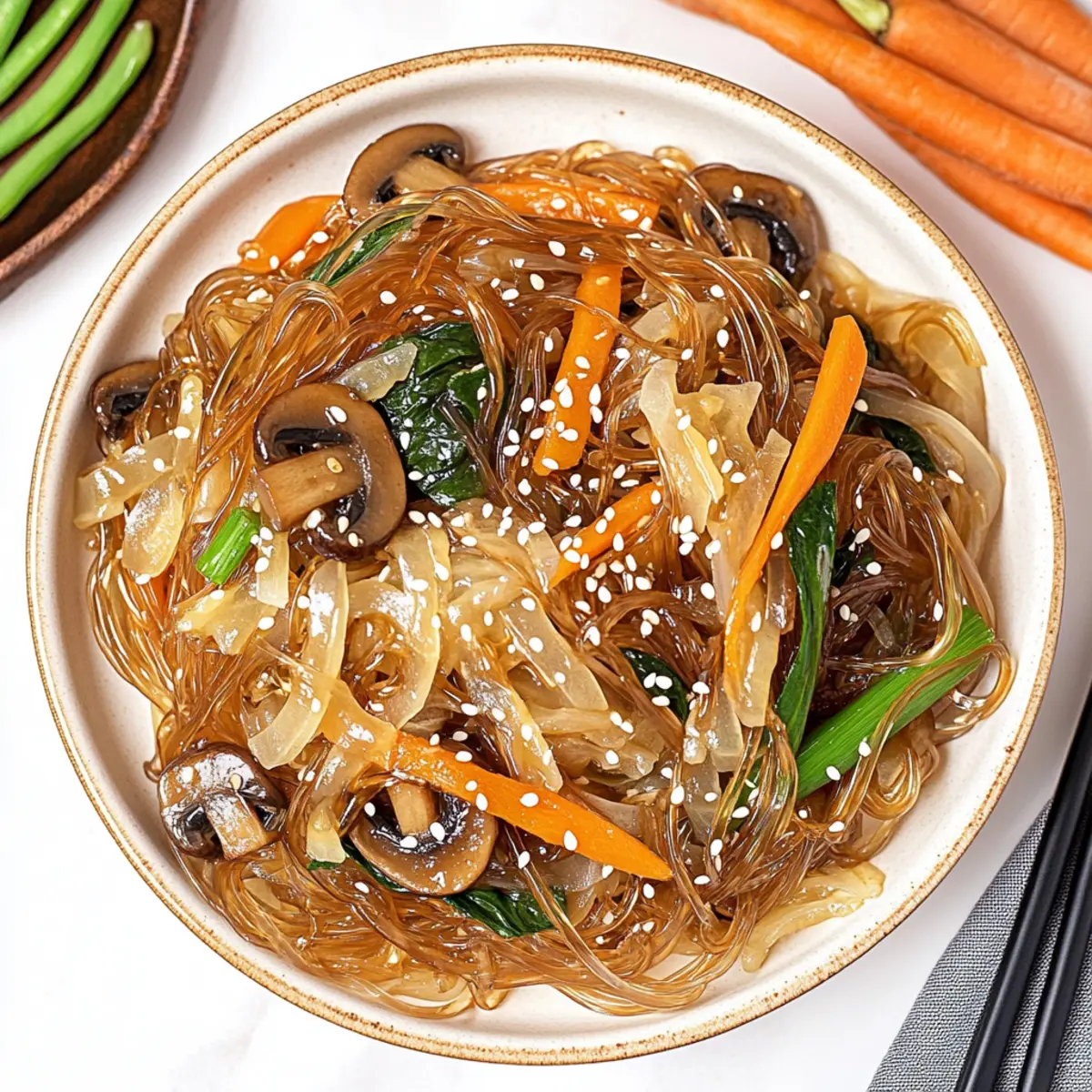
Japchae (Korean Glass Noodle Stir Fry) Recipe FAQs
How do I choose the best sweet potato glass noodles?
Absolutely! When selecting sweet potato glass noodles, look for packages that specifically state “sweet potato starch” on the label. These noodles should be translucent and slightly chewy in texture. Avoid any that appear overly brittle or have dark spots all over the package, as these could indicate poor quality.
How should I store leftover Japchae?
To maintain freshness, keep your leftover Japchae in an airtight container in the fridge. It can stay good for up to 3 days. Make sure to allow the dish to cool completely before sealing to prevent condensation, which can make the noodles mushy.
Can I freeze Japchae for later?
Yes, you can freeze Japchae! To do this, place portioned servings into airtight containers or freezer bags, ensuring you remove as much air as possible. It can be stored in the freezer for up to 2 months. When you’re ready to enjoy it, thaw it overnight in the fridge before reheating on the stovetop with a splash of water to keep it from drying out.
What if my noodles become sticky after cooking?
Very! If your noodles become sticky, it’s likely due to not rinsing them properly post-cooking. After boiling, make sure to drain them and rinse under cold water thoroughly for about 1-2 minutes until they cool down. This will stop them from continuing to cook and get that wonderful chewy texture we all love.
Is Japchae safe for those with gluten allergies?
Certainly! Japchae can be gluten-free as long as you use sweet potato glass noodles and gluten-free soy sauce or tamari. Double-check all your ingredients, especially sauces and seasonings, to ensure they don’t contain any gluten, keeping your dish safe for those with allergies.
What are some great protein alternatives for a vegetarian or vegan version?
For a delicious vegetarian or vegan Japchae, tofu is an excellent substitute! You can use extra-firm tofu, pressing it to remove excess moisture, then pan-fry it until golden. Alternatively, feel free to incorporate other plant-based proteins such as tempeh or edamame, which will add both flavor and texture to your dish!
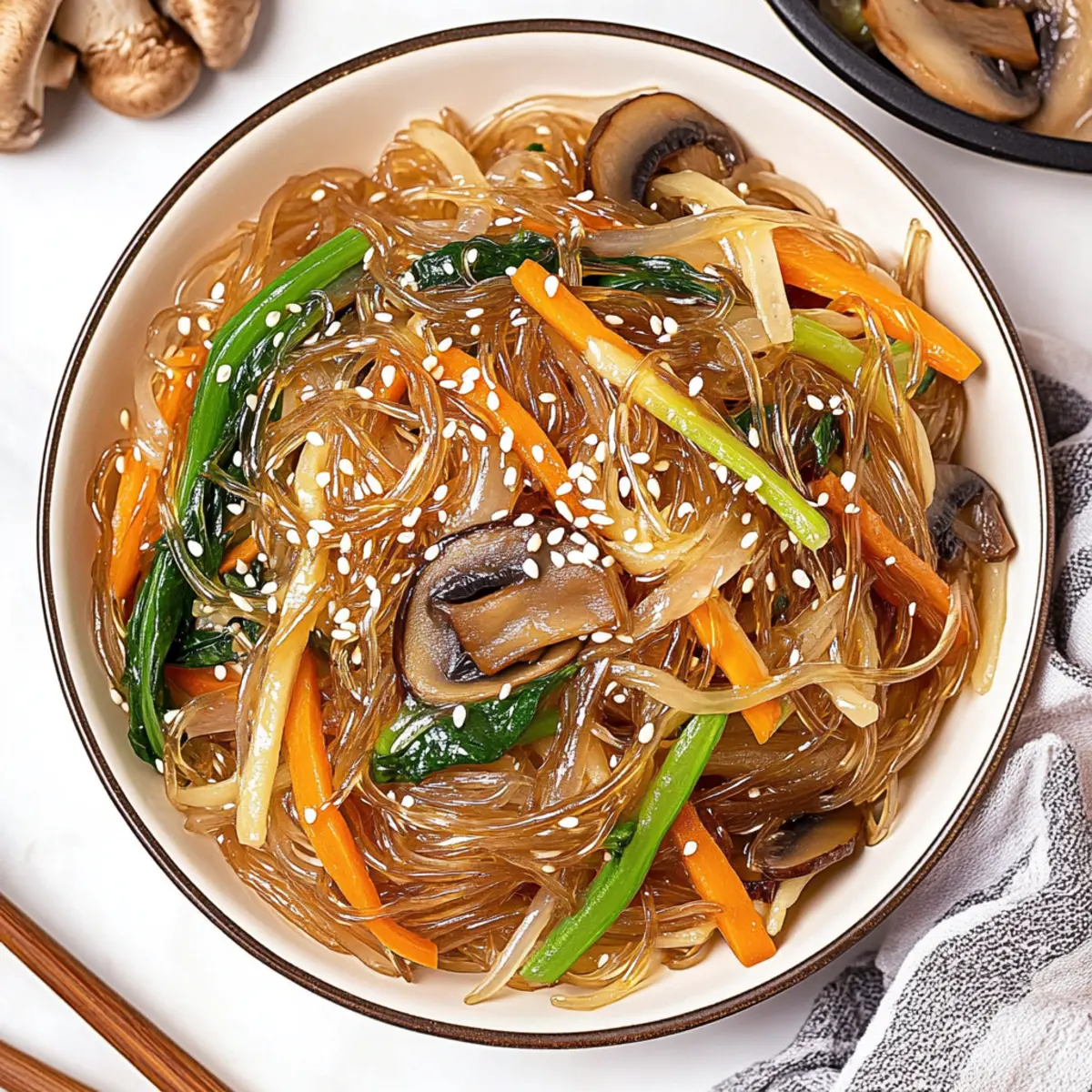
Japchae: Irresistible Korean Glass Noodle Stir Fry Delight
Ingredients
Equipment
Method
- Make the Sauce: In a mixing bowl, whisk together soy sauce, honey, and toasted sesame oil until smooth. Set aside.
- Cook the Noodles: Boil noodles for 10-15 minutes until soft. Drain and rinse with cold water.
- Prepare the Egg: Beat eggs and cook in a nonstick skillet to form a thin omelet. Julienne and set aside.
- Sear the Meat: In the same skillet, cook thinly sliced beef/pork until browned, then set aside.
- Cook the Vegetables: Sauté onion, carrot, and mushrooms for 2-3 minutes, then add spinach and wilt.
- Combine Everything: Heat sauce in skillet, add noodles, vegetables, meat, and omelet strips, mixing well.
- Serve: Garnish with sesame seeds and green onion; serve hot or warm.
Leave a Reply